Save 5% on your first order Save 15% on your Monthly subscirption Save 5% on your first order

Creatine Gel vs Creatine Powder: Which One Actually Works Better?
Hydrasolis
2/15/20263 min read


Creatine is one of the most researched and proven sports supplements in the world. Hundreds of clinical studies confirm it increases strength, improves muscle recovery, and enhances high-intensity athletic performance. If you lift weights, sprint, play sport, or do any kind of resistance training, creatine is worth taking.
But here is the question most people never think to ask: does the format matter?
In India, virtually every creatine supplement comes in powder form. You scoop it, mix it with water, hope it dissolves, and drink it. But there is now a newer option — creatine gel — that is changing how athletes and fitness-conscious people think about supplementation.
So which one is actually better? Let us look at the science.
What Is Creatine and How Does It Work?
Creatine is a naturally occurring compound found in small amounts in meat and fish, and produced in your body from amino acids. It is stored in your muscles as phosphocreatine, where it helps rapidly regenerate ATP — the primary energy currency your cells use during intense exercise.
When you supplement with creatine, you saturate your muscles with more phosphocreatine than diet alone can provide. The result is more available energy during short, intense efforts leading to more reps, heavier lifts, faster sprints, and better recovery between sets.
The benefits are not just for athletes. Studies have also shown creatine supports cognitive function, memory, and brain energy metabolism making it relevant for anyone under mental stress or fatigue.
Creatine Powder: The Standard
Creatine powder typically creatine monohydrate has been the dominant format for decades. It is well-studied, effective, and relatively affordable.
However, powder comes with practical drawbacks that many users quietly tolerate:
• Inconsistent mixing - creatine powder is notorious for clumping and not fully dissolving in water
• Gritty texture - undissolved particles create an unpleasant mouthfeel
• Requires preparation - you need a shaker, water, and time
• Bloating - some users report water retention and digestive discomfort, especially during the loading phase
• Stability issues - powder can degrade when exposed to moisture or heat, a real concern in India's humid climate
Creatine Gel: The Next Evolution
Creatine gel delivers the same active compound creatine in a pre-dissolved, liquid gel format. Because the creatine is already in solution, it bypasses the mixing and dissolution step entirely.
Here is why that matters from a science perspective:
• Faster absorption - dissolved creatine begins entering the bloodstream as soon as it hits your digestive tract, without waiting to break down from powder form
• Better bioavailability - liquid formats have consistently shown improved absorption rates in supplement research compared to solid or powder forms
• No clumping or gritty texture - the experience is smooth and immediate
• No preparation needed - tear the sachet, consume, done. No shaker required
• More stable in heat - liquid gel formats are less susceptible to degradation in warm, humid conditions
Does the Science Support Gel Format?
The evidence for liquid-form supplement absorption is well-established in pharmacology. Liquids and gels empty from the stomach faster than solids and powders, reaching the small intestine where absorption primarily occurs more quickly.
For creatine specifically, the key factor is how quickly it reaches muscle tissue. Faster gastric transit means faster muscle uptake. This is particularly relevant for pre-workout use, where timing matters.
A creatine gel sachet consumed 20–30 minutes before training gives your body more time to begin transporting creatine to muscle cells before the session starts compared to a powder that first needs to fully dissolve and pass through the stomach.
Who Should Use Creatine Gel?
• Athletes and gym-goers who train in the morning and want a fast, no-prep supplement
• Runners and cyclists who need portable, on-the-go nutrition
• People who have experienced bloating or digestive issues with creatine powder
• Anyone who values clean, minimal-ingredient supplementation without fillers
• Professionals and students who want the cognitive benefits of creatine without the gym-bro aesthetic of a protein shaker
Hydrasolis Creatine Gel
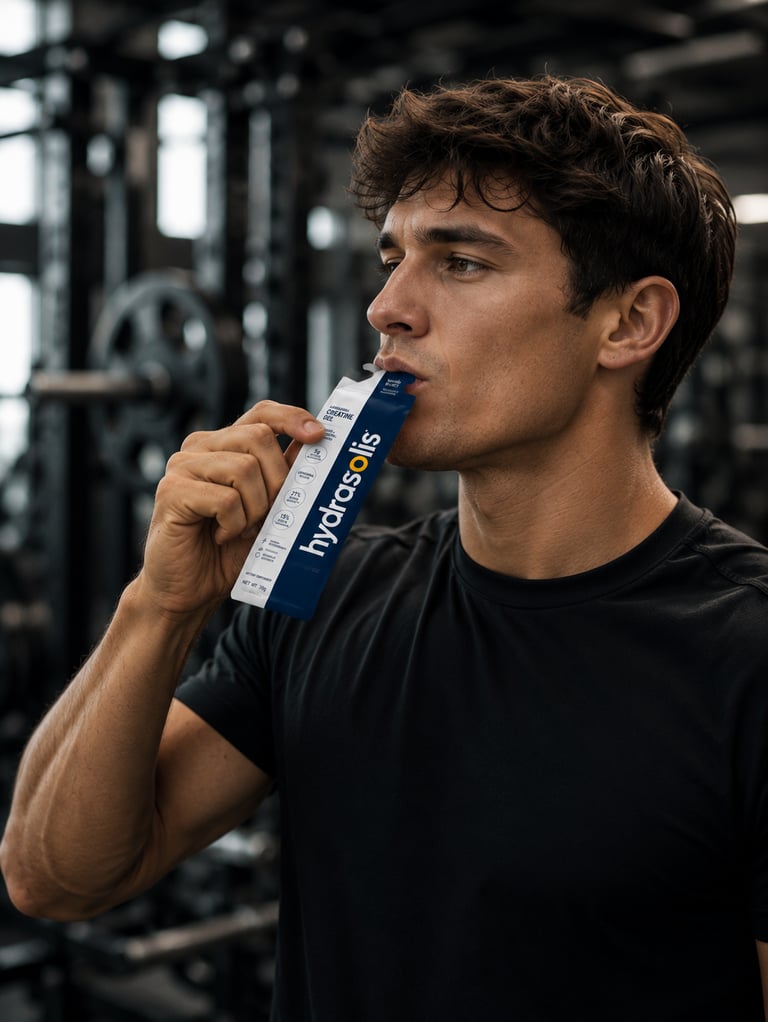
HydraSolis Creatine Gel is India's first creatine supplement in liquid gel sachet format. It delivers pharmaceutical-grade creatine monohydrate in a pre-dissolved, ready-to-consume gel and no mixing, no clumping, no preparation.
Each sachet contains a precise, clinically relevant dose with zero artificial colours, zero unnecessary fillers, and clean ingredients you can actually pronounce. It is designed for both athletes who demand performance and everyday users who simply want to feel sharper and recover faster
The Bottom Line
Both creatine powder and creatine gel contain the same active ingredient and both work. The difference is in convenience, absorption speed, and user experience.
If you are comfortable with the ritual of mixing a shake and the texture of powder does not bother you, creatine monohydrate powder is a perfectly valid choice.
But if you want faster absorption, zero preparation, and a cleaner experience - especially suited to India's heat and humidity - creatine gel is the smarter format.
Try Hydrasolis Creatine Gel - India's first liquid gel creatine supplement.
Science-backed mineral rich hydration for every Indian.
Contact
Stay in the loop
© 2026. All rights reserved.
LInks


Get updates on new product launches, exclusive offers and more